
ICD-11 Compliant Hospital Software SoftCure
Accurate Coding for Diagnosis and Billing
SoftCure comes with ICD-11 (International Classification of Diseases, 11th Revision) built directly into the hospital software, so doctors and billing staff never need a separate coding tool or manual reference book. The moment a diagnosis is entered during OPD or IPD documentation, the system offers searchable, WHO-standardized ICD-11 codes right within the same screen — keeping clinical workflow fast while ensuring every record meets the latest global coding standard.
ICD-11 replaces the older ICD-10 framework with a more detailed, digitally native structure that better reflects modern clinical practice, including expanded categories for traditional medicine, mental health conditions, and post-COVID conditions. For hospitals, this shift means diagnostic data is no longer just a textual note in a patient's file — it becomes structured, searchable, and exchangeable information that can move seamlessly between departments, between hospitals, and across India's digital health ecosystem.
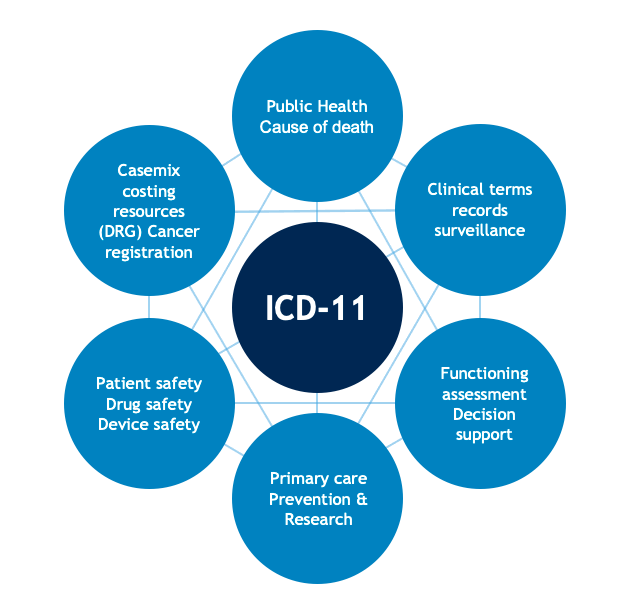
Softcure has ICD-11, alphanumeric codes used by doctors, health insurance companies, and health agencies across the world to represent diagnoses. Every disease, disorder, injury, infection, and symptom has its own ICD-10 code and ICD-11. ICD-11 codes are mainly used for processing health insurance claims.
The software has all updated chapters of the ICD code for every department of hospitals to find the exact code for every disease/symptom.
In our software, while writing the doctor notes, nursing notes, and discharge summaries, we can easily select our department to filter the code classifications and can select a specific code by auto-filtration available in the software.
List of ICD-11 Chapters
- 1A00–1H0Z Certain infectious or parasitic diseases
- 2A00–2F9Z Neoplasms
- 3A00–3C0Z Diseases of the blood or blood-forming organs
- 4A00–4B4Z Diseases of the immune system
- 5A00–5D46 Endocrine, nutritional or metabolic diseases
- 6A00–6E8Z Mental, behavioural or neurodevelopmental disorders
- 7A00–7B2Z Sleep-wake disorders
- 8A00–8E7Z Diseases of the nervous system
- 9A00–9E1Z Diseases of the visual system
- AA00–AC0Z Diseases of the ear or mastoid process
- BA00–BE2Z Diseases of the circulatory system
- CA00–CB7Z Diseases of the respiratory system
- DA00–DE2Z Diseases of the digestive system
- EA00–EM0Z Diseases of the skin
- FA00–FC0Z Diseases of the musculoskeletal system or connective tissue
- GA00–GC8Z Diseases of the genitourinary system
- HA00–HA8Z Conditions related to sexual health
- JA00–JB6Z Pregnancy, childbirth or the puerperium
- KA00–KD5Z Certain conditions originating in the perinatal period
- LA00–LD9Z Developmental anomalies
- MA00–MH2Y Symptoms, signs or clinical findings, not elsewhere classified
- NA00–NF2Z Injury, poisoning or certain other consequences of external causes
- PA00–PL2Z External causes of morbidity or mortality
- QA00–QF4Z Factors influencing health status or contact with health services
- RA00–RA26 Codes for special purposes
- SA00–SJ3Z Supplementary Chapter: Traditional Medicine Conditions – Module I
- VA00–VC50 Supplementary section for functioning assessment
Standards
- IRDA Coding
- IRDA Bill Format
- TPA Packages
- ICD-11 Codes
What Our ICD-11 Enabled HMS Offers
Searchable Diagnosis Coding: Doctors can search and select the correct ICD-11 code directly while documenting a diagnosis, reducing manual lookup time and minimizing transcription errors during OPD or IPD consultations.
Accurate Insurance & TPA Billing: Diagnosis codes entered through ICD-11 feed directly into the billing module, ensuring claims submitted to insurers, TPAs, and government schemes match the diagnostic terminology insurers expect, reducing claim rejections caused by coding mismatches.
NHCX & PMJAY Compatibility: Standardized ICD-11 codes align with the diagnostic data formats required for NHCX claims processing and PMJAY package mapping, helping ensure claims pass through automated verification without manual correction.
Structured Clinical Data for EMR: Every diagnosis recorded against a patient's EMR is stored as structured, coded data rather than free text, making it easier to retrieve, analyze, and report on patient history during future visits.
MIS & Epidemiological Reporting: Hospitals can generate accurate disease-pattern reports, track condition prevalence across departments, and support public health reporting requirements using properly coded diagnostic data.
Reduced Coding Errors: Built-in validation prevents incomplete or invalid code entries, supporting consistency across doctors, departments, and shifts — particularly valuable in high-volume OPD settings where documentation speed matters.